Get a free report audit within 5 minutes
Run operational AI-audit by MDCplus12 February 2026
Operational Audit vs Financial Audit: What’s the Difference?
While both involve structured review and analysis, their objectives, scope, and outcomes differ significantly. This article exploring this topic further.
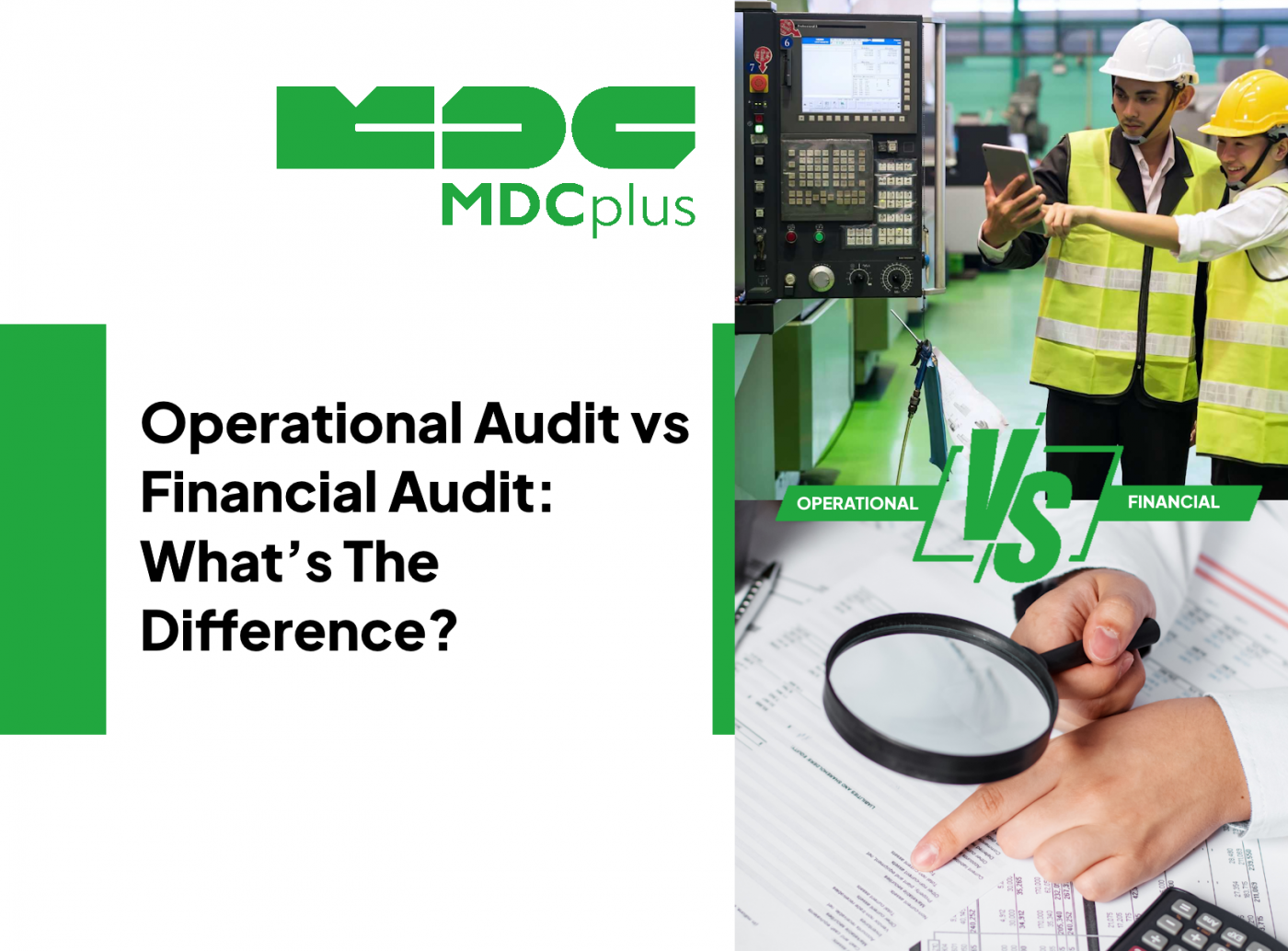
An operational audit evaluates how efficiently and effectively a company’s processes function. A financial audit, in contrast, verifies the accuracy and compliance of financial statements. While both involve structured review and analysis, their objectives, scope, and outcomes differ significantly.
What Is an Operational Audit?
An operational audit examines business processes, workflows, performance metrics, and internal controls to assess efficiency, effectiveness, and risk exposure. It focuses on how well operations support strategic objectives and whether resources are being used optimally.
Primary Objectives of an Operational Audit
- Evaluate process efficiency and performance
- Identify operational bottlenecks
- Detect control weaknesses
- Assess KPI reliability
- Recommend performance improvements
What Is a Financial Audit?
A financial audit reviews a company’s financial statements to ensure accuracy, compliance with accounting standards, and absence of material misstatements. It is often conducted annually and may be required for regulatory, investor, or compliance purposes.
Primary Objectives of a Financial Audit
- Verify financial statement accuracy
- Ensure compliance with accounting standards (e.g., IFRS, GAAP)
- Detect fraud or material errors
- Confirm adequacy of financial controls
- Provide assurance to stakeholders
Key Differences Between Operational and Financial Audits
Scope and Focus
- Operational audit: Processes, systems, performance, and efficiency
- Financial audit: Financial statements and accounting compliance
Time Horizon
- Operational audit: Can be periodic or project-based
- Financial audit: Typically annual
Outcome
- Operational audit: Process improvement recommendations
- Financial audit: Assurance opinion on financial statements
Who Conducts It
- Operational audit: Internal audit teams or external consultants
- Financial audit: Independent external auditors
When Should a Company Conduct an Operational Audit?
An operational audit is appropriate when performance gaps, inefficiencies, or system inconsistencies are suspected. It is often used before major transformation initiatives or investment decisions.
- Declining operational KPIs
- Process delays or bottlenecks
- Manual reporting dependencies
- Integration gaps between systems
- Preparation for strategic change
Can Operational and Financial Audits Overlap?
While the objectives differ, both audit types may evaluate internal controls. Weak operational processes can affect financial reporting accuracy, and financial discrepancies may indicate operational inefficiencies.
However, the core intent remains distinct: financial audits provide assurance, while operational audits drive performance improvement.
Conclusion
Operational audits and financial audits serve different purposes within an organization. Financial audits ensure compliance and reporting accuracy, whereas operational audits evaluate how effectively systems and processes support business performance. Understanding the distinction helps organizations apply the right audit approach for their objectives.
About MDCplus
Our key features are real-time machine monitoring for swift issue resolution, power consumption tracking to promote sustainability, computerized maintenance management to reduce downtime, and vibration diagnostics for predictive maintenance. MDCplus's solutions are tailored for diverse industries, including aerospace, automotive, precision machining, and heavy industry. By delivering actionable insights and fostering seamless integration, we empower manufacturers to boost Overall Equipment Effectiveness (OEE), reduce operational costs, and achieve sustainable growth along with future planning.
Ready to increase your OEE, get clearer vision of your shop floor, and predict sustainably?
Other articles
17.03.2026
CNC Machine Monitoring: Complete Guide for All Brands (2026)
How to monitor CNC machines in real time - Fanuc, Haas, Mazak, Siemens, DMG Mori and more. Protocols, free setup guides, OEE tracking and MDCPlus integration.
Read more
17.03.2026
Free Manufacturing Software: The Ultimate List (2026)
The complete guide to free and open-source manufacturing software - MES, SCADA, ERP, CAD/CAM, WMS, QMS, IIoT and more. 35+ tools reviewed with honest pros, cons and links.
Read more
16.03.2026
OEE & Production KPIs: The Complete Guide for Manufacturers (2026)
Everything you need to measure and improve OEE, downtime, cycle time, and production KPIs. Formulas, benchmarks, free templates, and real-world examples.
Read more
16.03.2026
CNC Error Codes: Complete Guide for All Brands (2026)
This guide covers alarm code systems for every major CNC brand: Fanuc, Haas, Mazak, Siemens Sinumerik, DMG Mori, Heidenhain, Okuma, Mitsubishi, Mori Seiki, Brother, Makino, and Fagor. For each brand you'll find the most common codes, their causes, and the fastest resolution path.
Read more
16.03.2026
How to Start Monitoring Makino CNC for Free (2026)
Connect Makino Pro 5 and Pro 6 machining centers to real-time monitoring via MTConnect and Focas - free setup guide for horizontal and vertical machining centers.
Read more